The information here is backed by data in authoritative medical journals and now known by the many thousands of people we have educated. However it still is effectively unknown as far as the general pubic is concerned. We want to make sure everyone in the USA and abroad is alerted to the important information that has been kept from the traveling public and even the endemic states’ residents for over 100 years. Before VFS had made this information public and published this page, none of the information was reported outside medical journals. Only when we started our work in 2002 had others begun to learn about and wake up to discuss these more shocking aspects of the devastating, debilitating and deadly disease commonly known as Valley Fever.
This page was a part of Valley Fever Survivor’s original 2002 web launch and had been updated with new information and statistics periodically over the years.
-
- Valley Fever is contracted by inhaling spores of Coccidioides sp. fungus. These fungi are Coccidioides immitis (C. immitis for short and the specific fungus most commonly discussed in medical literature for Valley Fever) and also Coccidioides posadasii (C. posadasii for short). Valley Fever is also known as cocci and the medical term for the disease is coccidioidomycosis.
- The fungus that causes Valley Fever was regulated by the federal government in the Antiterrorism and Effective Death Penalty Act of 1996. In accordance with this law, anyone possessing, using, transferring, or receiving any of the select agents (including Coccidioides) must notify the Secretary of the Department of Health and Human Services, or is otherwise committing a federal crime. To culture Coccidioides safely in a laboratory setting, one must adhere to Biosafety Level 3 Regulations. However, you are allowed to live in, work in, and visit areas where it grows. You can even expose your children to this biohazard without penalty.
- To guard against biological terrorism in the wake of the 9/11 terrorism and subsequent anthrax deaths, Coccidioides was regulated even further in the Public Health Security and Bioterrorism Preparedness and Response Act of 2002.
- Even when dealing with a disease that has so many misconceptions, the reasons stated for removing Coccidioides from the select agent list in 2012 were nonsensical and self-contradictory. It is not presently regulated as a biological weapon, but that decision could easily be reversed since all of the dangers that prompted its original regulation are still in place. (CDC. Possession, Use, and Transfer of Select Agents and Toxins; Biennial Review. 42 CFR Part 73 (5 Oct 2012), 61084-61115.)
- Valley Fever case reporting in Arizona increased 3,931% from 1990 (255 reports) to 2009 (10,279 diagnosed case reports). That was not a typo. There was almost a four thousand percent increase in cases reported from 1990 to 2009, with further ongoing increases as the epidemic continues. When considering the many undiagnosed infections that are never reported, the effect of the Valley Fever epidemic is staggering.
- Legionella and anthrax can be contracted through ventilation systems. The Coccidioides arthroconidial spore is as small as the anthrax spore, making infection possible in your office, home, automobile, airport or hotel. It can pass through an open door in your home or a window screen. VFS was the first to make this potentially life saving suggestion: When driving in your car it is advisable to keep your vents closed, especially when it is dusty or windy outside. People constantly thank us for this suggestion to help protect their families.
- If a portion of the population in a given area has developed coccidioidomycosis, it is called an endemic disease. If a region has Coccidioides growing in its native soil, the region is an endemic area to the fungus.
- Strong winds and blowing dust should be a signal to keep your family and pets indoors. Be sure to close your windows when it’s windy. The spores that cause Valley Fever are frequently airborne and have been known to be spread by wind as far as 500 miles beyond their original endemic area.
- For safety’s sake, no exposure is too short!
- An ordinary dust mask will NOT prevent Valley Fever. The tiny spore size of Coccidioides can easily be inhaled through the mask. While miner’s masks with an NIOSH-approved N95 respirators or better can prevent inhalation of Coccidioides spores, ordinary paper N95 and N100 masks are unlikely to have a protective seal around the wearer’s face. This information came from the late legendary Valley Fever medical pioneer Dr. Hans Einstein.
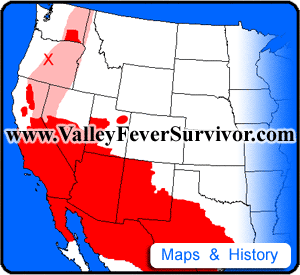
- America’s primary endemic areas are located in Arizona, California, Texas, Nevada, Utah and New Mexico. New areas had been discovered recently in Eastern portions of Washington State and Oregon. There are also endemic areas outside the United States in Mexico, Central America, and South America. When the soil is disturbed these spores can become airborne and inhaled, sometimes hundreds of miles away from their original place of growth.
- In the year 2000, an estimated 29,500,000 people visited Arizona. No one knows how many new students, business travelers, new residents, vacationers, retirees, or other visitors to endemic areas have been infected. This was because Arizona, California, New York, Nevada, and Rhode Island were the only states that required reporting of this disease for many years. By 2018 about half of the states require reporting of confirmed Valley Fever infections. Many victims are unaware that this disease even exists and doctors misdiagnose it frequently. One can only imagine how many infections occur among visitors to all the endemic areas!
- It is possible to contract Valley Fever just by passing through an endemic area to Coccidioides sp. It can even be contracted by a visitor passing through an airport. There is a case of a woman changing planes in the Phoenix Airport who came down with Valley Fever. Other visitors have contracted Valley Fever just by passing through endemic areas.
- Two thirds of all Valley Fever infections are contracted in Arizona. According to the 2000 Census, Arizona’s population increased by 40%. This made it the 2nd fastest growing state in the country and its ongoing population growth shows no signs of slowing. Ongoing increases in population have occurred as the epidemic expanded.
- Other fast growing endemic states are California, Nevada, and Texas. People are moving into these areas rapidly, in essence increasing the population’s exposure to Coccidioides.
- Kern County (Bakersfield) is the most heavily endemic area in California.
- The VFCE, located in Tucson, AZ, has called coccidioidomycosis Arizona’s “local secret” for decades. Very few people outside states with endemic areas know that Valley Fever even exists.
- Valley Fever is not a benign disease. Valley Fever can have devastating medical, emotional, and monetary effects on those who require treatment and their families. According to statements in the congressional record, Valley Fever kills 500 Americans every year. However, if active surveillance evaluated all patients with VF symptoms, perhaps thousands of annual deaths would be discovered.
- The VFCE estimates that there are 150,000 new VF infections annually in the southwestern United States. This was said to be based on the population data in selected counties of Arizona, California and Texas with a 3% annual likelihood of infection.
- By applying the 3% annual infection rate to the year 2000 population in the same endemic counties (6.38 million residents), the estimate of VF infection rose to 191,400 new infections per year. These are just the highly endemic selected counties; their population continued to increase dramatically since the 2000 census, the infection can still be picked up elsewhere, winds can spread the infection out of these counties, and visitors are not tracked nationally or internationally for infection. With only a handful of recent exceptions since that time, Arizona and the entire nation had experienced an explosion in infection rates that was considered the worst Valley Fever epidemic of all time – until the following year’s tragedy eclipsed what was once thought to be the worst.
- Doctors have also estimated that only 2% of the total number of Valley Fever infections are diagnosed. Based on the record-breaking infection rate in 2006, 5,493 patients were diagnosed with Valley Fever in Arizona. This means 274,650 people would have been estimated to be infected in just that one state for 2006 alone. Over 400,000 were estimated to be infected nationally in 2006, and nearly 400,000 nationally in 2007. In 2009, the estimated total of cases and undiagnosed infections jumped to over 600,000 people. Then there were epidemics like in 2011 when Valley Fever infections had gone so far beyond expectations that the true cost of the disease may never be fully known.
- It was estimated in 1980 that ten million Americans were already infected with coccidioidomycosis, as noted in Dr. David Stevens’ textbook, Coccidioidomycosis.
- As stated in Medical Mycology, “Between 1930 and 1960…it was established that histoplasmosis [another fungal disease] and coccidioidomycosis infected over 100 million people in the United States alone.” Mass testing has not been attempted for decades to learn more.
- “…too often Valley Fever is still perceived as simply an annoyance by the general public, health care professionals and local government officials. Even the majority of local residents in the endemic area perceive Valley Fever as a relatively benign disease. Combining this misconception with the lack of knowledge about the disease among new residents, tourists, new businesses, athletes and students moving into the endemic area, creates a vast population base which must endure Valley Fever illnesses (often without an accurate diagnosis) while being unprepared to deal with any possible complications arising from a Coccidioides sp. infection.” — Robert J. Brauer Jr., Executive Director of VFCE. (VFCE Annual Report 2001-2002)
- Although Valley Fever can be contracted all year round, more cases are diagnosed in Arizona from June to July and October to November. (Comrie AC. Climate factors influencing coccidioidomycosis seasonality and outbreaks. Environ Health Perspect. 2005 Jun;113(6):688-92.)
- Valley Fever is most likely to cause illnesses in California from June through November — but as with Arizona and other endemic areas, it can be contracted at any time of year. (Galgiani JN, Brauer RJ. VFCE 2002-2003 annual report.)
- Valley Fever can be contracted at any time of the day or night.
- Valley Fever is frequently misdiagnosed because it can have so many symptoms (i.e.: pneumonia, malaise, rashes, fever, headaches, and rheumatism to name just a few).
- In some Valley Fever cases, shunt tubing can grow a biofilm that resists antifungal treatment. You may wish to read this article and share it with your doctor if you have shunt tubing and a Valley Fever infection.
- Valley Fever starts in the lungs but can disseminate (spread to cause secondary infections) to other parts of the body such as skin, bones, joints, and the meninges (the lining of the brain).
- Meningitis (the inflammation of the lining of the brain) is the most lethal form of Valley Fever dissemination.
- Once a person is infected, Valley Fever never completely leaves. To date, it can not be totally eliminated from the body by any medication. There is no cure.
- Valley Fever can be a chronic illness or it can wax and wane in varying degrees.
- Whether your Valley Fever case is severe or asymptomatic, it is with you for life. It can be inactive but can activate at any time, even 45 or more years later. No long term studies have been conducted to see how many asymptomatic cases reactivate or to gauge the strength of reactivated infections.
- The primary infection of coccidioidomycosis is an equal opportunity biohazard. It doesn’t care if you are an infant, elderly or a dog, cat, horse, zoo animal or any other mammal.
- The secondary infection (dissemination) is known to occur more often in the elderly, African-Americans, Filipinos, organ transplant recipients, those with immune deficiencies, women in the third trimester of pregnancy, and men more often than non-pregnant women. However, huge numbers of people who are not in any of the risk groups still suffer severe infections. It is a double edged sword to warn about risk groups since it is useful to warn people who are at the greatest risk per capita of severe disease, but ignores the people who actually suffer far more often overall but are not in any risk group.
- Sharon Filip, the co-founder of Valley Fever Survivor was not in any of the risk categories but still suffered a severe infection. Don’t count on your age, current health, or lack of risk factors to save you. To read about Sharon’s personal story, click here.
- If you are African-American, Filipino, Hispanic, pregnant, diabetic, on medication, elderly, have HIV, received an organ transplant, or any immune deficiency, you may want to consider not visiting, living in, or moving to or near any endemic area.
- “30% of Filipino patients with pulmonary disease progressed to disseminated disease. Nonwhite race was a predictor for dissemination; African American patients more often developed disseminated bony disease while Filipinos were more likely to develop cutaneous or central nervous system disease. Relapse of disseminated coccidioidomycosis occurred in 24% of patients; the risk was highest (71%) among those with central nervous system disease…Predictors of permanent disability included African American or Filipino race, central nervous system disease, and bony disease.” (Crum NF, Lederman ER, Stafford CM, Parrish JS, Wallace MR. Coccidioidomycosis: A Descriptive Survey of a Reemerging Disease. Clinical Characteristics and Current Controversies. Medicine (Baltimore). 2004 May;83(3):149-175).
- If you are in the 2nd or 3rd trimester of pregnancy, live in or visit an endemic region, and contract Valley Fever, you have a significantly higher risk for a severe disseminated infection. Before antifungal drugs were used to combat cocci almost all cases of pregnant women with Valley Fever died. Even though doctors presently have drugs that can help the mother, some antifungals like fluconazole and ketoconazole can cause birth defects or even kill the baby. If you plan to visit an endemic region during your pregnancy, you may wish to consider the health risks as a part of your decision-making. Only you can decide what risks you are willing to take with your life and your baby’s life.
- “Infections acquired during pregnancy are often aggressive. The risk of disseminated disease, as well as maternal and fetal or neonatal [young baby] mortality, increases the later in pregnancy the infection is acquired. Termination of pregnancy or early delivery should be considered, depending on the stage of pregnancy, and amphotericin B therapy given. This treatment appears to be safe for the fetus if the pregnancy is continued. Infants who acquire C. immitis infection in the postnatal period also have a higher mortality rate than older children and adults.” (Stevens DA. Current concepts: coccidioidomycosis. N Engl J Med 1995;332:1077-82)
- Men tend to have disseminated cases of cocci more often than women. Even though they do not face the risk of Valley Fever during pregnancy, men should be aware that cocci can infect testicles, and these cases have previously been treated with surgical removal of the infected testicles (Cocci Study Group 2002). Cocci can also infect and inflame the prostate and may require a biopsy to be diagnosed. (Truett AA, Crum NF. Coccidioidomycosis of the prostate gland: two cases and a review of the literature. South Med J. 2004 Apr;97(4):419-22)
- People over 60 years of age are twice as likely to be diagnosed with Valley Fever and to have the most severe cases. Retirees and vacationers coming from other states should have the right to know about this disease before deciding to relocate to or visit any endemic area.
- Valley Fever is more likely to disseminate if there is an immune deficiency present — even if the victim was never aware of his or her initial infection, it could make its presence felt years later. However, by the sheer weight of the number of infected patients, more people who are completely healthy suffer severe cases overall. Quibbling over risk factors like an immune deficiency could incorrectly bring people with healthy immune systems to the conclusion that they might be safe from Valley Fever. This would be a dangerously false and potentially deadly mistake for them to make. You can be a perfectly healthy person with no immune deficiency, contract Valley Fever, and have a severe or lethal case.
- “Some infections even spread out of the lungs to many other parts of the body. These complications require long periods of medical and surgical treatment and even then may prove fatal. In these respects, Valley Fever is not so different from polio, measles, chicken pox, or lyme disease, infections for which a vaccine strategy has already been put into widespread use, with the exception that there is no vaccine for Valley Fever.” — John Galgiani, MD., VFCE Director (VFCE Annual Report 2001-2002)
- An increasing number of dogs in Arizona are suffering Valley Fever infections. They have greater chances of contracting Valley Fever than humans do partly because of behavioral differences. Cats, horses, cattle and other mammals can be infected as well.
- Dogs infected with Valley Fever frequently suffer from secondary (disseminated) infections. The fungus can spread from the lungs to any part of the body. Many of the dogs’ symptoms are the same as in humans, however owners will notice lameness, tiredness, loss of appetite, fever, cough and possibly a change in temperament.
- Dolphins, Sea Lions, and Sea Otters have been fatally infected by cocci that had been blown out to sea.
- In spite of what some people believe, reinfection and reactivations are possible. The medical research is clear on the fact that without a DNA probe it is not possible to know whether a person’s illness is a reactivation of their first infection or if their illness is from inhaling additional spores. Laboratory accidents have proven that reinfections can occur in humans.
- Valley Fever does not always show positive in titer tests, even in an infected individual. Since only the immune response is presently detected in blood testing, if your body is not producing VF antibodies, the blood test will be negative (it will not show a VF infection).
- Valley Fever’s lung nodules have frequently been misdiagnosed as lung cancer. The Arizona Respiratory Center recommends patients keep copies of X-Rays with VF nodules so the nodules are not misdiagnosed as lung cancer later. If your chest X-rays seem to show lung cancer and you have ever lived in, visited, or received packages from an endemic region, we recommend you have yourself checked for cocci and get a second opinion as to whether the lung cancer diagnosis is accurate.
- There are claims that sulfur (flowers of sulfur or sublimed sulfur) can cure Valley Fever. Please be aware we have found zero medical research on the validity of these claims, this sulfur is unrelated to “sulfa” drugs (sulfonamides), and there can be serious side effects if sulfur is ingested. Warning labels on sulfur packages have stated that it is not for ingestion. No doctor to our knowledge has ever suggested a person take this toxic, explosive substance.
- Some people dismiss unpleasant reactions to the sulfur treatment in VF patients because some fungi release toxins when they die. This is known as the Herxheimer reaction, but does not apply to Valley Fever because the fungi of Coccidioides sp. are not known to release these toxins. Sulfur is therefore the likely cause of the discomfort. Further, some people are allergic to sulfur. In our interview with Robert J. Brauer Jr., Executive Director of VFCE, he stated, “Sulfur treatment [for Valley Fever] is basically taking a toxic chemical and putting it into your system, like sulfuric acid.” We can not recommend the use of sulfur for this disease.
- Nikkomycin Z is a drug created in the 1970’s and was shown in the 80’s and 90’s to be able to destroy chitin, the material in Coccidioides cell walls. (Hector RF, Zimmer BL, Pappagianis D. Evaluation of nikkomycins X and Z in murine models of coccidioidomycosis, histoplasmosis, and blastomycosis. Chemother. 1990 Apr;34(4):587-93). Later studies have shown experimental animals’ lungs were sterilized of the fungus, meaning nikkomycin Z could be a cure for Valley Fever. The drug has been nearly ignored by the medical community for decades while millions of other victims continued to be infected by Valley Fever. In 2005 nikkomycin Z was experimentally shown again to work against Coccidioides both alone and with other antifungal drugs. (Hector RF, Davidson AP, Johnson SM. Comparison of susceptibility of fungal isolates to lufenuron and nikkomycin Z alone or in combination with itraconazole. Am J Vet Res. 2005 Jun;66(6):1090-3). Although the drug appears to be promising, it is worth noting that previous vaccine candidates had been effective in mice but not in humans so there is no guarantee of nikkomycin Z’s effectiveness. In 2005 the University of Arizona finally purchased the patent for nikkomycin Z with the intent to research its effectiveness, but as much as $100 million may be required to test this proposed cure and bring it to market. We hope that it will truly be a cure and that this worthwhile endeavor can be financed completely.
- Although there is presently no cure, itraconazole, fluconazole, and amphotericin B are the most commonly used drugs to treat VF, along with newer drugs like posaconazole and voriconazole. Unfortunately, these antifungal drugs may have side effects that are so strong the dose must be lessened. The newest antifungal drug in the same class, isavuconazole, has virtually no track record of Valley Fever treatment to gauge its effectiveness. Read about antifungal drugs and their side effects in Valley Fever Epidemic.
- Like the West Nile Virus, Valley Fever has been transferred from organ donors to recipients. Increased testing is essential.
- Despite the fact that disseminated coccidioidal infections spread through the bloodstream, the American Association of Blood Banks does not check the blood supply for cocci. We believe it is vital that our blood supply be checked for Coccidioides spp.
- hypercalcemia is associated with the Valley Fever infection. See our glossary for more about hypercalcemia.
- Studies show that the growth and maturation of Coccidioides spp. are stimulated by human sex hormones such as testosterone and progesterone. In addition to the immune system problems corticosteroid treatments can cause, this may be why some treatments have caused many cocci cases to worsen. (Jones FL Jr, Spivey CG Jr. Spread of pulmonary coccidioidomycosis associated with steroid therapy. Report of a case with a lupus-like reaction to antituberculosis chemotherapy. J Lancet. 1966 May;86(5):226-30. Gibbs BT, Neff RT. A 22-year-old Army private with chest pain and weight loss. Mil Med. 2004 Feb;169(2):157-60. Stevens DA. Coccidioidomycosis. N Engl J Med. 1995 Apr 20;332(16):1077-82).
- As a result of their Valley Fever infections, some people have lost their jobs, health insurance, property, and homes. Some were rendered destitute and unable to pay for dental procedures, car insurance, electricity, phone charges or even their medication.
- Endemic states do not require veterinarians to educate their clients about the threat Valley Fever poses to their pets. Endemic states also allow animals from non-endemic areas to suffer needlessly by bringing them into local zoos where they can inhale cocci easily. Too many animals have died and suffered as a result.
- Employees relocated into endemic states are not told about Valley Fever, what it can do to them, their children, their pets, or what they can do to mitigate the risks.
- Real estate companies and their agents in endemic states are not required to tell any prospective customers about the existence of Coccidioides and the dangers of Valley Fever.
- People in endemic areas are not informed about the dangers of gardening in their yards, hiking, bike riding or camping in the desert. All of these activities can disturb the soil and cause cocci spores to become airborne.
- The Chambers of Commerce and Tourist Bureaus of endemic areas do not send information about the state’s naturally occurring biohazard in tourism literature. Rather they entice people to come, go camping in the desert, retire there, etc. without informing them of the dangers.
- Cotton exported from endemic areas has been known to contain Coccidioides spores. Nationally and internationally, workers coming into contact with these have been infected. At least one person has died as a result.
- Products purchased from roadside stands in endemic areas have contained Coccidioides spores and tourists need to be aware of this danger. These souvenirs may be hazardous to your health.
- The USDA does not require food exported from endemic areas to be checked for cocci. Consider that the next time you smell fruits for freshness when they came from endemic US areas, Mexico, Central America or South America.
- Cocci has hampered our military for decades, with the first extensive studies tracking thousands of cases during World War II.
- A research study shows a 26.8% death rate in seniors who are diagnosed with pneumonia from Valley Fever.
- A 2006 retrospective survey (Chu JH, Feudtner C, et al) found only 12% of people hospitalized with Valley Fever were immunocompromised, showing that 88% of patients had healthy immune systems but still suffered greatly due to their Valley Fever infections.
- From January – December 2011: Arizona had 16,438 medically diagnosed cases. Using the CDC model that says only 2% of infections become diagnosed cases, nearly 822,000 infections overall would have been estimated in Arizona from January through December 2011. The average estimated infections in Arizona from January – December 2011 were 68,500 every month (or 2,200 a day) just by inhaling the biohazard in Arizona’s air. The national VF epidemic adds tens of thousands more VF infections but they were not tracked for 2010. Later CDC surveys that show most Valley Fever symptoms are not even tested, let alone diagnosed. This indicates that even the highest numbers in the statistical model may be underestimates of the true scope of the problem.
- Statistical analysis available for hospitalized patients with Valley Fever for 2002 show that 8.5% of children with Valley Fever died and 6% of adults died from Valley Fever. Many thousands more have been known to contract Valley Fever since 2002, and since they only represent 2% of estimated overall infections, millions of people have contracted it since.
- Juvenile hall youth prisoners (14-18 years old) in 1960’s California were sent into Los Angeles County work camps as a part of an experiment to find the source of a lethal cocci outbreak. The people conducting the experiment knew cocci killed at least one previous prisoner and sickened many others, they knew it was in at least one of their various work camps, and they chose to find it by continuing to send children into these areas and tracking which kids were infected. It is hard to imagine our correctional system would have such blatant disregard for youth prisoners’ health. The level of immorality displayed by this experiment was on par with the 1980’s Iranian military use of children as mine sweepers – sending the kids to sacrifice their lives by stepping onto and detonating explosive land mines, thereby identifying the dangerous areas. It’s bad enough that residents and visitors are not warned about the risks of valley fever, but it is a disgrace to subject children to an experiment that could infect, debilitate, or kill them. None of the children in this cocci experiment died immediately, however as many as 26% of those in one work camp studied were infected with cocci when tested in six months. (Rao S, Biddle M, Balchum OJ, Robinson JL. Focal endemic coccidioidomycosis in Los Angeles County. Am Rev Respir Dis 1972 Mar;105(3):410-6).
- “In Arizona, California, and Texas, increasing numbers of residents are affected by coccidioidomycosis. As a result, employers in these areas increasingly face lost days from work and substantial medical costs attributable to coccidioidal disease. Such organizations as the military, schools, travel agencies, and employers with national applicant pools actually create the opportunity for groups to relocate to or visit endemic regions, with subsequent risk for exposure. For these institutions, the issue is further complicated by the possible liability for the occurrence of infections that would otherwise not have happened.”
(John Galgiani, Coccidioidomycosis: A Regional Disease of National Importance. Ann Int Med 1999 Vol 130 No 4 (part 1) p293-300.)